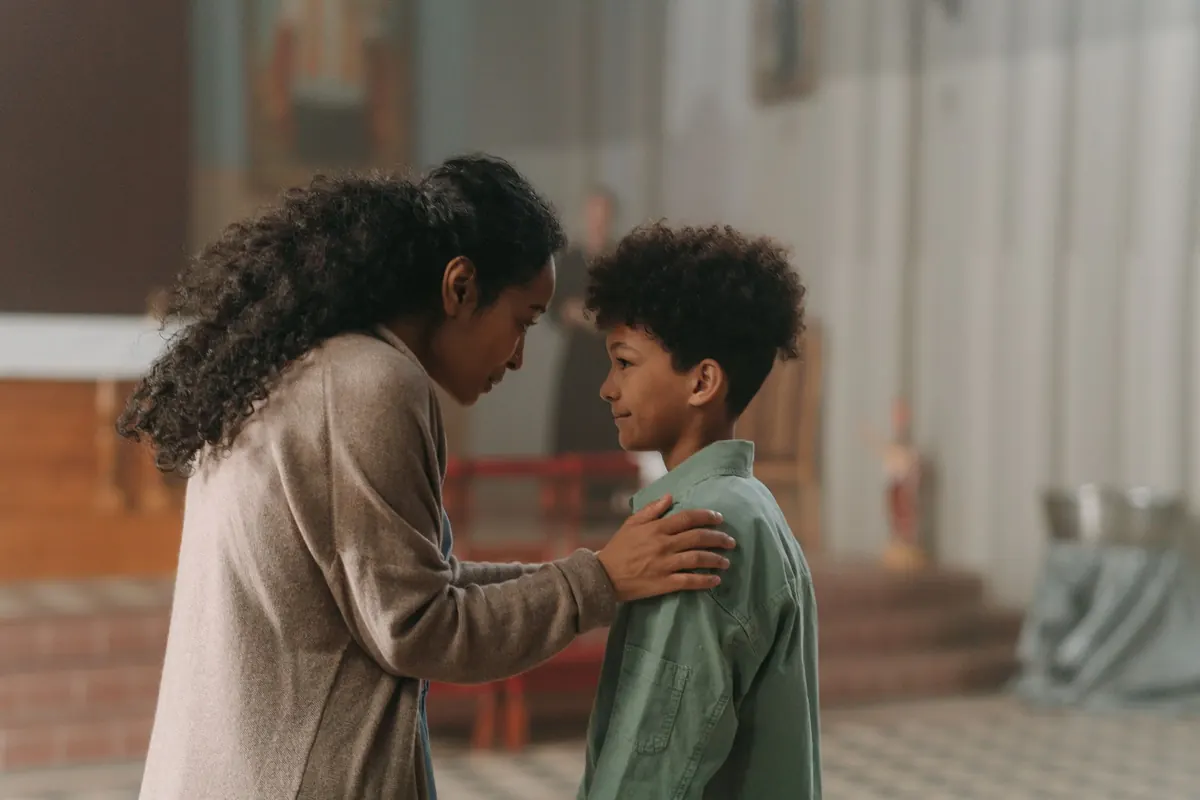
The house goes quiet in a way you feel in your chest. You yelled — really yelled — and now your seven-year-old is studying the floor, or your teenager has already left the room. Whatever set it off, you know you crossed a line.
What happens next matters more than what already happened. Repair is not damage control, and it is not about making yourself feel better. Done honestly, a real apology is one of the clearest pictures of the gospel your child will ever see up close. Here is a three-step reset you can use today.
Why Repair Matters More Than a Perfect Record
Children do not learn about forgiveness from parents who never need it. They learn it from watching someone they love say, "I was wrong," and mean it.
When nothing is said after a blowup, a child draws their own conclusions: Anger is normal and unmentionable. Mistakes must be hidden. Apologizing is weak. Over years, that is how kids become adults who cannot admit fault to a spouse, a boss, or God.
When you apologize well, you teach the opposite. You show that sin is real, that it hurts people, that confession is safe, and that relationships survive honest reckoning. Paul puts it plainly:
Be kind to one another, tenderhearted, forgiving one another, as God in Christ forgave you. — Ephesians 4:32
You are not just repairing a Tuesday afternoon. You are modeling repentance to the person who will imitate you for the rest of their life.
Step 1: Settle Yourself Before You Speak
A hurried apology delivered through clenched teeth is not repair. It is a performance, and children can tell the difference. Give yourself a few minutes first.
- Breathe out longer than you breathe in, several times. Slower breathing settles a racing body faster than a lecture to yourself.
- Pray something short and honest: "Lord, I sinned against my child. Give me words that heal instead of words that defend."
- Move. Rinse a dish, step onto the porch, walk to the mailbox. Motion burns off the adrenaline still looking for a target.
If your child is small and frightened, do not leave them alone with it. Sit on the floor nearby and say, in a low voice, "I'm sorry I yelled. I'm going to take a minute to calm down, and then I want to talk with you." Then go.
One test before you open your mouth: are you still building your case against them in your head? If so, you are not ready. An apology is not the place to relitigate the argument.
Step 2: Apologize Specifically, Without Conditions
Vague apologies repair nothing. "Sorry about earlier" leaves a child wondering what exactly you are sorry for and whether it will happen again. Name it.
- Say what you did. "I yelled at you and slammed the cabinet door."
- Call it wrong, plainly. "That was sin. That is not how God wants me to speak to you."
- Drop the "but." "…but you know how you push me at bedtime" takes back everything you just said.
- Name the impact. "I scared you. You did not deserve to be spoken to that way."
- Say what changes. "Next time I feel that rising, I'm going to step outside and pray before I say anything."
With a younger child
"I yelled at you about your shoes, and I used a loud, angry voice. That was wrong. I'm sorry. God wants me to be gentle, and I wasn't. Will you forgive me?" Keep it to two or three sentences. Little ones do not need a speech; they need your face soft and your voice steady.
With a teenager
"I accused you of lying before I had the facts, and I said it in front of your brother. That was unfair and it was wrong. I'm sorry. I'd like to hear what actually happened, and I'll listen without interrupting."
Three things to avoid. "I'm sorry you feel that way" is not an apology. Asking "You're not still mad at me, are you?" puts your child in the position of comforting you — take that need to God instead. And do not apologize for the yelling while quietly canceling the consequence. "I was wrong to shout at you. The phone still stays in the kitchen tonight." Both can be true, and children respect a parent who holds both.
Step 3: Reconnect, Then Make a Plan
Words are the doorway, not the room. Reconnection usually happens without much talking. Sit on the floor and build something with a six-year-old. Hand a teenager the car keys and drive nowhere in particular. Make eggs at an odd hour. A hand on the shoulder, a shared snack, twenty minutes of unhurried attention says what you cannot say twice.
Then, once the air is clear, build a plan for the next time — because there will be a next time.
- Decide in advance what you will do when you feel the heat rising: hands flat on the counter, three slow breaths, a short prayer, leave the room.
- Give your child a phrase they are allowed to use. "Mom, take a minute" is a gift to both of you, and it teaches them that naming a problem is not disrespect.
- Tell them what you will do after you cool down: come back, apologize, and finish the conversation calmly.
- Close with a brief prayer together if that is part of your family's rhythm: "Lord, thank you for forgiving us. Help us speak gently with each other. Amen."
When the Blowups Keep Coming
Losing your temper once is a moment. Losing it most days is a pattern, and patterns have roots: exhaustion, an anxious mind, a strained marriage, a job that leaves you empty, or an angry household you grew up in and swore you would not repeat.
Bring it into the light. Tell your spouse, a trusted friend, or your pastor. If your anger frightens you, or if a child has been hurt or left afraid, talk to a pastor and a licensed counselor promptly,
Photo: cottonbro studio / Pexels